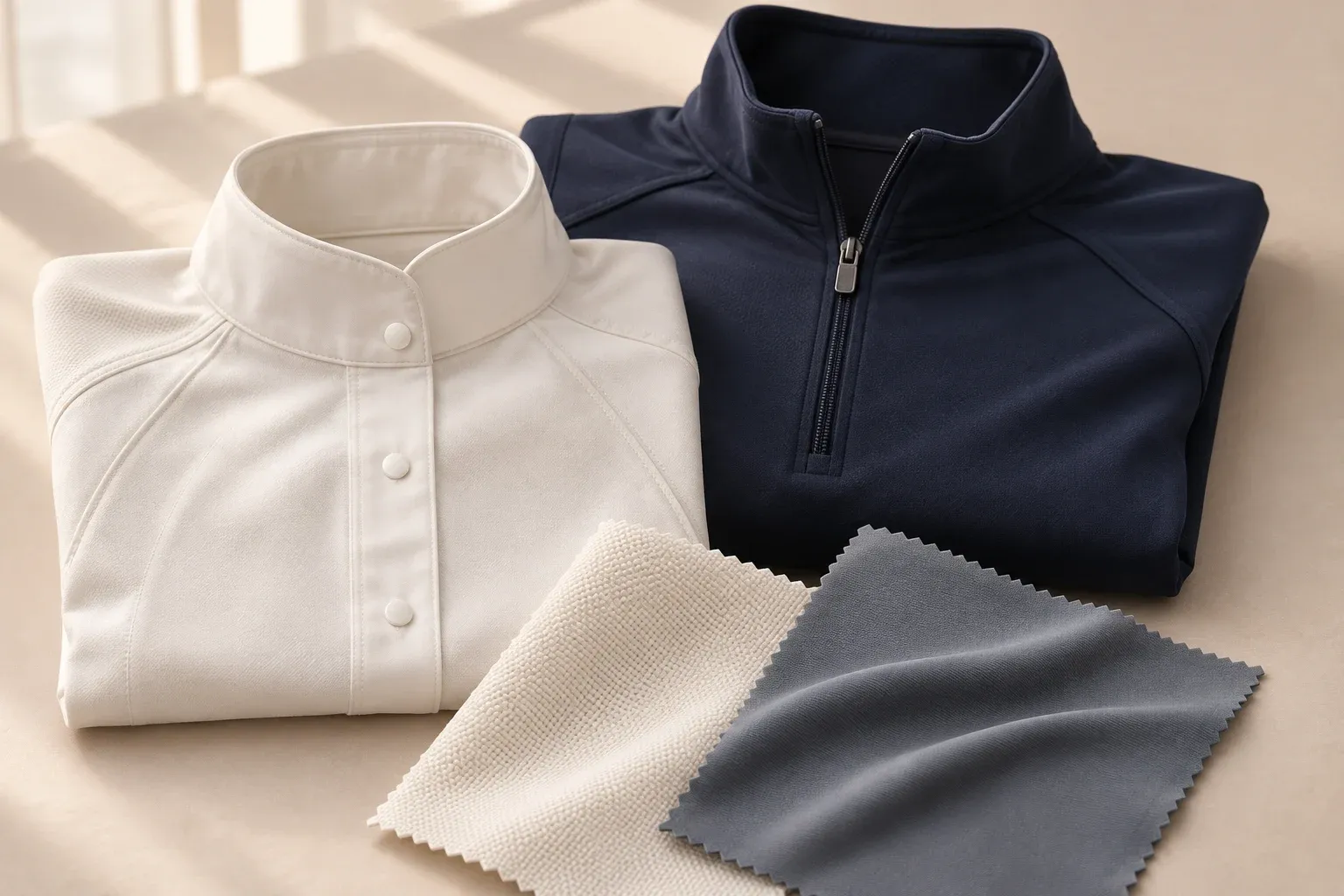
For a fitted equestrian base layer, start with a smooth stretch fabric that follows the shoulder and arm through a riding position. For a relaxed training polo, pure cotton is an option when soft hand feel matters. Show shirts call for a clean finish under a jacket, while sun shirts need coverage and evidence for any UV protection claim.
In this guide
Choose fabric by riding top style
Begin with how the top will be worn. A stand-collar show shirt under a jacket has different priorities from a base layer worn close to the skin for an outdoor schooling session. Set the fit and intended layers before committing to a swatch.
| Style | Fabric direction | What to check on the sample |
|---|---|---|
| Competition show shirt | Smooth fabric with enough give for the intended tailored fit | Collar shape, placket line and opacity under a jacket |
| Training polo | Pure cotton when a soft hand feel and a relaxed fit are the priority | Wash shrinkage, collar shape, sleeve ease and hem length |
| Technical base layer | Smooth nylon-elastane for a close fit with low bulk | Forward arm reach, seam comfort, recovery and moisture handling |
| Long-sleeve sun shirt | Lightweight material selected for coverage and the required UV performance | Sleeve and neckline coverage, mesh placement and test evidence |
Compare nylon stretch and pure cotton
75% nylon / 25% elastane
We offer this smooth, flexible blend as a starting point for fitted riding tops. It suits a pattern that sits close to the body or needs to fit under another layer. Check the fabric in the intended cut, especially across the upper back and elbows. If you add mesh, compare its stretch and recovery with the body fabric at the seam.
100% cotton
We offer pure cotton for club polos, everyday training and casual tops. Decide whether a textured knit such as piqué or a smoother construction suits the design. Give the pattern enough ease for arm reach and record the change in length, width and collar shape after washing. For a fitted technical brief, compare the actual cotton swatch with the proposed stretch fabric during fitting.
Weight and construction are confirmed on the selected top swatch. A nylon blend with the same fiber percentages can be made at several weights and with different stretch and recovery.
Set separate targets for airflow, wicking and drying
Air permeability describes how readily air moves through a fabric. Liquid moisture management concerns how sweat spreads or moves through the material. Drying is a separate question about how quickly the fabric releases the water it holds under specified conditions.
For a technical base layer, decide which properties matter to your rider and request data for the proposed fabric. AATCC TM195 is an example of a liquid moisture management method. AATCC TM201 measures drying rate under its heated-plate procedure. Agree the test conditions and acceptance targets before making a performance claim.
Check show-shirt finish and sun-shirt coverage
Show shirts under a jacket
Review a white or light-colored sample under bright light and under the intended show jacket. Ask the rider to reach forward and turn their shoulders. Look for seam show-through, distortion around the buttons or zip, and a collar that holds its shape when closed. Check the neckline and cuffs with the other pieces in the outfit.
Long-sleeve tops for sun exposure
Set the intended coverage at the neck, wrist and back hem. Review any mesh as a separate panel, especially where it is exposed during riding. If you plan to state a UPF rating, request evidence for the selected material and color, including any exposed contrast or mesh panels. AATCC TM183 covers UV transmission through fabrics.
Approve the top in riding posture
Use the intended color, trims and decoration on the fitting sample. Try it on with any layers it is meant to sit under, and repeat the checks after the planned wash and dry process.
- Reach forward as if holding the reins. Check upper-back tension, sleeve length and whether the hem pulls out when tucked.
- Check the inside of the collar, zipper guard, armhole and side seams for bulk or rubbing.
- Compare garment measurements and collar shape before and after laundering. Review color transfer where light and dark panels meet.
- Check that embroidery or a transfer moves with the fabric in the planned placement. Record the approved fabric, trim and artwork versions.
Frequently asked questions about riding top fabric
Is 100% cotton suitable for an equestrian polo?
Yes. Pure cotton is a starting point for relaxed polos and club tops when a soft hand feel is a priority. Confirm enough movement in the fit, then check collar shape and dimensions after laundering.
What fabric works for a fitted riding base layer?
A smooth stretch fabric is a starting point. EZ offers a 75% nylon and 25% elastane blend for close-fitting tops. Compare recovery, seam comfort and reach on your sample and ask for test data if the brief includes a drying or wicking claim.
How do you verify UPF for a riding sun shirt?
Request a UV test report for the intended material and color, then check sleeve, neck and hem coverage on the garment. Include any exposed mesh and contrasting fabric in the performance review.
TAKE THE NEXT STEP
Discuss fabrics for your riding tops