
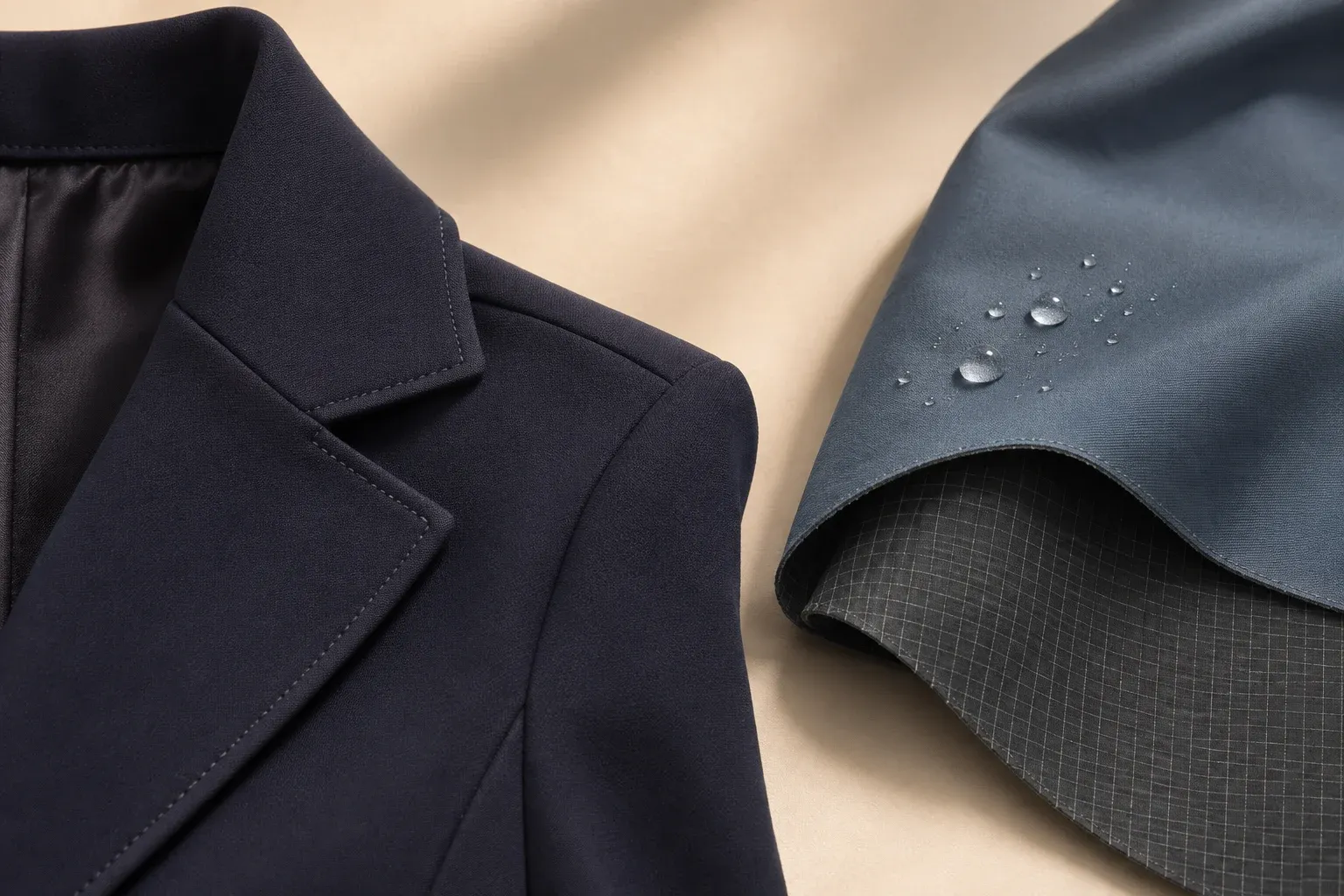
The best fabric for an equestrian jacket depends on its job. A show jacket needs structure and room for shoulder movement. A training jacket needs to move over the layers riders wear. A wet-weather jacket needs an appropriate shell combined with seams, closures and cuffs designed for the expected rain.
In this guide
Choose the fabric for the type of jacket
Start with the rider, weather and layers. At EZ Equestrian, we can discuss a textured jacket fabric and color range or an outer shell swatch with a grid backing. Select the composition, weight and construction for the project and confirm them with the swatch and sample.
| Jacket type | Fabric starting point | What to check on the sample |
|---|---|---|
| Competition show jacket | A structured outer fabric with enough give for the pattern, plus compatible interfacing and lining | Lapels, shoulder reach, button line and back vents when seated |
| Training jacket | Stretch fabric, a lightweight softshell or a lined option for cooler days | Range of motion over layers, sleeve coverage and hem balance |
| Wet-weather riding jacket | A shell with a documented performance target and an appropriate backing or lining | Seams, zip, pockets, cuffs and protection at the collar or hood |
Build a show jacket that holds its shape and moves
Compare how the outer fabric, interfacing and lining behave as a set. The outer fabric helps set the drape. Interfacing supports areas such as the lapel and front edge. The lining and its ease affect how the jacket slides over a show shirt and how freely the rider can move.
Fit the jacket over the shirt it is intended to accompany. Close the front and ask the rider to reach forward, bend the elbows and sit in riding posture. Check whether the back pulls across the shoulders, the lapel lifts, the front closure strains or the vents pull open. If a fabric swatch feels flexible but the jacket restricts movement, review the shoulder pattern, lining ease and assembled seams.
Choose a training layer for the season
For mild schooling sessions, compare a lighter stretch fabric with a light softshell. For colder conditions, evaluate a warmer backing or lining over the rider's usual base layers. Softshell describes a family of materials with different constructions. Ask what each candidate does for stretch, wind resistance and warmth under the conditions in your brief.
Check the garment during activity and while standing between sessions. The fit should leave room for shoulder and elbow movement with the planned layers. Verify that cuffs still cover the wrists when the rider reaches and that the hem sits where intended when seated. Record the exact outer fabric and backing that passed those checks.
Specify water protection for the shell and the garment
Surface repellency
This describes how the face of a fabric resists surface wetting. A spray test such as AATCC TM22 can help compare that behavior. If wash durability matters to the brief, ask for the agreed result after laundering as well.
Fabric resistance to water penetration
Hydrostatic pressure testing, such as AATCC TM127, measures how the material resists water penetration under pressure. Ask for the method, result and exact material tested. Specify water vapor transmission separately if moisture vapor movement is part of the design brief.
Rain protection in the finished jacket
Review how the shell is joined around the shoulder seams, zip and pocket openings. Agree seam treatment where needed and inspect the collar, cuffs and any hood. Validate the assembled jacket under agreed conditions that reflect the expected rain, movement and duration of use.
Set jacket fabric and sample approval criteria
Put material and garment checks in the same brief. Assign a check to each feature that will affect fit, finish or the buyer's performance claims.
- Record the approved swatch code, composition, weight, color and finish, plus the backing, lining and interfacing where used.
- List the intended layers, jacket length, sleeve reach and vent behavior in riding posture.
- Identify seam treatment, zip and pocket construction, cuffs and collar or hood details.
- For a weather claim, request the material report and document what was checked on the assembled jacket before approving bulk production.
Frequently asked questions about equestrian jacket fabric
Should a show jacket fabric stretch?
Stretch can help a tailored show jacket accommodate forward reach. The shoulder pattern, seams and lining also affect movement. Test the whole jacket over the intended shirt in a riding position.
When should I choose softshell for a riding jacket?
Compare a softshell for active training when the brief calls for a balance of mobility, warmth and weather resistance. For sustained rain, specify the shell performance and how the assembled jacket will protect seams and openings.
How do I verify that a riding jacket is waterproof?
Check water resistance data for the actual shell material. Agree how seams, closures and openings will be assessed on the finished garment and validate the jacket under the rain conditions your brief calls for.
TAKE THE NEXT STEP
Discuss fabrics for your equestrian jackets